
Why MCP Matters for Enterprise AI
Model Context Protocol (MCP) helps AI securely connect to enterprise systems, making AI more practical, scalable, and useful across business operations.
July 30, 2026
Most organizations are actively exploring where AI can help, whether that's helping employees find information, supporting software development, improving customer service, or streamlining internal processes.
But there's a big difference between an AI tool that can draft an email and one that can genuinely help people do their jobs.
To be useful, AI needs context.
It needs access to the right information at the right time. That might mean understanding a customer's history, pulling a project status update, reviewing a production incident, searching internal documentation, or helping an employee navigate a business process.
That sounds straightforward, but it raises an important question. How do you connect AI to all of your business systems without building a custom integration every time a new AI tool comes along?
That's exactly the problem Model Context Protocol, or MCP, was designed to solve.
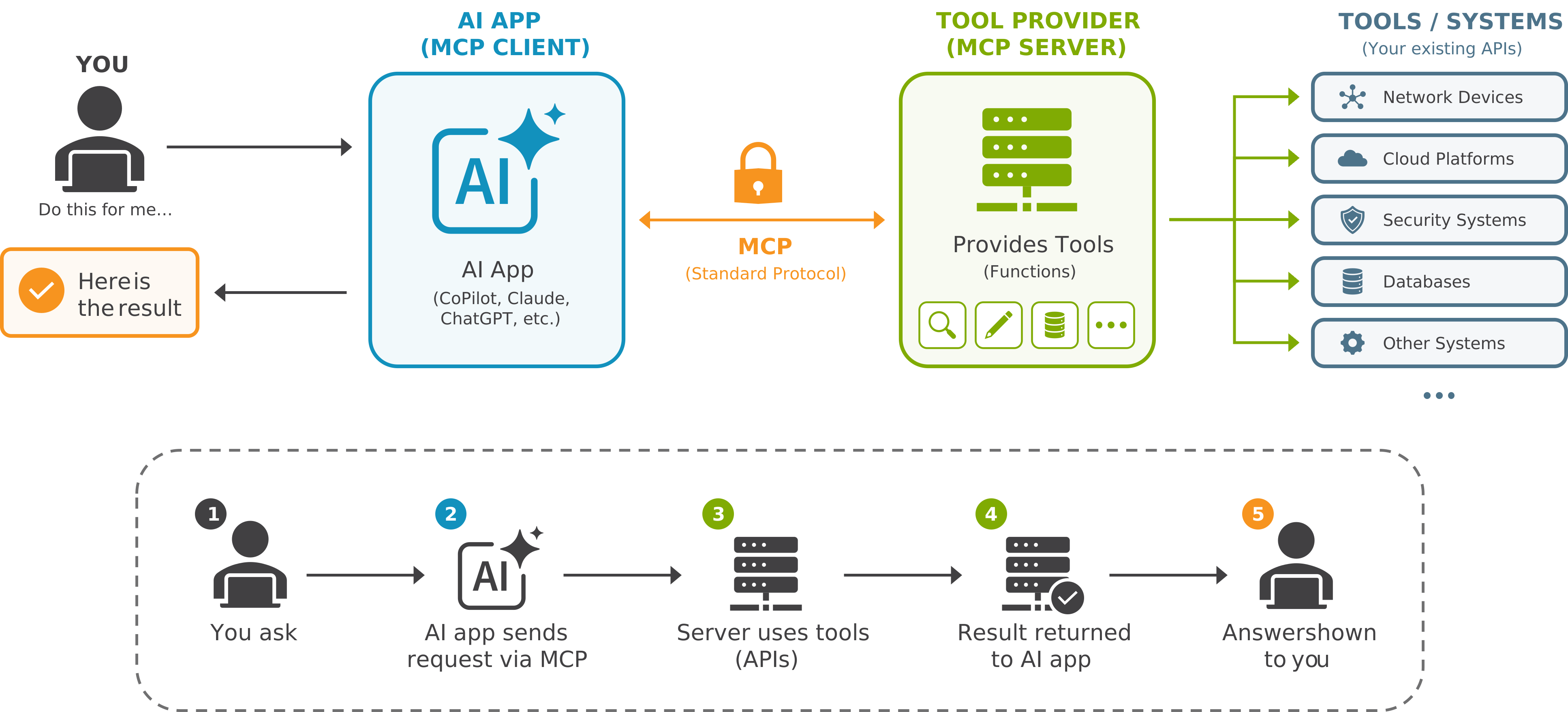
A Common Language for AI
The easiest way to think about MCP is as a common language between AI applications and the systems your business already depends on.
Most organizations have a complicated technology landscape. Information lives in cloud platforms, databases, collaboration tools, CRM systems, documentation sites, development platforms, reporting tools, and dozens of other applications.
Historically, connecting those systems has meant building integrations one at a time. Introducing AI only adds to that complexity because every assistant may need access to different systems, each with its own permissions, security requirements, and business rules.
MCP takes a different approach.
Instead of creating a new connection for every AI use case, organizations can expose approved capabilities once and make them available to multiple AI tools. Put simply, it creates a reusable way for AI to interact with the enterprise.
Why Should Businesses Care?
The real value of MCP isn't the protocol itself. Most business users will never need to understand how it works behind the scenes.
What matters is what it makes possible.
Imagine asking an internal AI assistant to summarize the day's production issues. Instead of searching through monitoring tools, incident records, deployment history, and internal documentation, the assistant could gather the approved information and present it in a single, useful summary.
Or imagine a project manager asking for a status update that pulls together information from project plans, customer requests, and documentation in seconds.
These are the kinds of experiences people are starting to expect from AI. Not answers based only on general knowledge, but answers grounded in the work already happening inside the business.
That's where MCP comes in. It provides a more consistent and scalable way to make those experiences possible.
The Bigger Shift
The bigger story is that AI is moving beyond the chatbot.
The next generation of AI won't just answer questions. It will help employees understand information, coordinate work, identify patterns, and even perform approved tasks across the systems they already use every day.
Of course, that doesn't mean AI should have unrestricted access to everything. Quite the opposite.
As AI becomes more connected, governance becomes even more important. Organizations still need to decide what information AI can access, what actions it can take, and where people should remain involved.
The strongest AI strategies won't be the ones that give AI the most freedom. They'll be the ones that balance innovation with security, privacy, and accountability.
Looking Forward
MCP is still an emerging technology, but it points toward where enterprise AI is headed.
The organizations that see the greatest value from AI won't necessarily be the ones using the newest model or the latest tool. They'll be the ones that safely connect AI to the knowledge, systems, and processes that already power their business.
MCP is one piece of that foundation.
It encourages organizations to think beyond isolated AI experiments and toward a future where AI becomes a practical, trusted part of everyday work.
That's why it's worth paying attention to. Not because everyone needs to become an expert in MCP, but because it may shape how AI delivers real business value in the years ahead.
Keep Reading
You might also like.
Tech Spotlight
Human Expertise, AI-Amplified
AI doesn't replace operational expertise, it amplifies it. Discover how leading organizations use AI to see more, decide faster, and act with confidence.
Tech Spotlight
Build Less, Configure More: Platform Insight in Regulated Software
In regulated industries, software must be flexible yet compliant. Platform insight helps teams use built-in audit, security, and control features effectively.
Tech Spotlight
The IT Leader's Dilemma: Reliability vs. Innovation
IT leaders face constant pressure to innovate without breaking what works. Here’s how forward-thinking organizations manage reliability and change at once.